Water Softeners, Whole-Home Treatment, and Filtration: Finding What Your Home Really Needs
Water is one of those things we rarely think about until it starts causing trouble. A cloudy glass, white marks around the faucet, dry-feeling skin after a shower, or an appliance that seems to be struggling can all make you wonder what’s actually happening with the water in your home. The thing is, not every […]
Water is one of those things we rarely think about until it starts causing trouble. A cloudy glass, white marks around the faucet, dry-feeling skin after a shower, or an appliance that seems to be struggling can all make you wonder what’s actually happening with the water in your home.
The thing is, not every water problem has the same cause, and there isn’t one magic system that fixes everything. Sometimes the issue is hard water. Sometimes it’s sediment, chlorine, taste, or something else entirely. Choosing the right treatment starts with figuring out what your water needs in the first place.
Start With the Water, Not the Equipment
It can be tempting to browse water treatment systems online and immediately start comparing prices and features. But that approach can easily lead to buying equipment that isn’t suited to your home.
Water testing is a much better starting point. A proper test can provide information about hardness, pH, dissolved minerals, sediment, and other characteristics. Once you know what you’re dealing with, choosing a treatment system becomes far less of a guessing game.
This matters because two houses in the same neighborhood can sometimes have noticeably different water conditions, especially when private wells are involved. Your neighbor’s solution might be excellent for them and completely unnecessary for you.
Understanding What Water Softeners Actually Do
Hard water is usually caused by minerals such as calcium and magnesium. These minerals aren’t necessarily visible when the water comes from the tap, but they can leave plenty of evidence behind.
You might see chalky deposits on shower doors, faucets, and dishes. Soap may not lather as easily, and water heaters can develop mineral scale over time.
That’s where water softeners come in. Traditional softeners work by reducing the calcium and magnesium responsible for water hardness. For many households, this can mean less scale, easier cleaning, and fewer mineral deposits around plumbing fixtures.
There’s also a practical benefit people sometimes overlook: softer water can make routine cleaning feel less frustrating. When you aren’t constantly wiping away white spots, the bathroom suddenly seems a little easier to keep tidy.
Why Whole-Home Treatment Can Be Worth Considering
Many people think about water quality only in terms of drinking. That’s understandable, but drinking is just one small part of household water use.
Water flows through showers, washing machines, dishwashers, water heaters, bathroom sinks, and other fixtures. If the water has a particular problem, treating it only at one faucet may not address what is happening throughout the property.
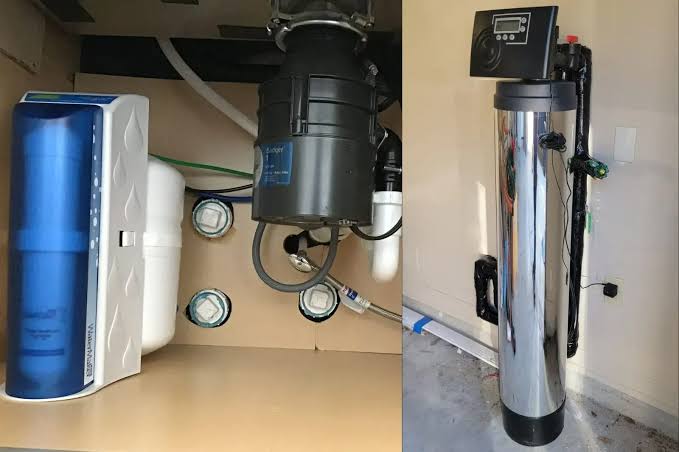
A properly designed whole home water treatment system treats water as it enters the house, depending on the specific technology being used. This can provide more consistent water quality at multiple points throughout the home.
For families dealing with hard water, sediment, chlorine, or other common concerns, whole-home treatment can be a convenient approach. Instead of installing separate solutions at several taps, one appropriately sized system can handle much of the work.
Of course, the system still needs to be matched to the home’s water conditions and daily demand.
Filtration and Purification Aren’t the Same Thing
The words “filtration” and “purification” are often used interchangeably, but they can refer to different processes.
Filtration generally involves physically or chemically reducing unwanted particles and substances from water. Sediment filters, for example, can capture particles such as sand or rust. Carbon filters are often used to improve taste and reduce chlorine.
Purification can involve more advanced technologies depending on the specific water concern. Reverse osmosis and ultraviolet treatment are examples of technologies used in certain applications.
Good filtration & purification begins with understanding what needs to be removed. There’s little value in choosing an advanced system simply because it sounds impressive if your actual water problem could be solved with something much simpler.
In fact, simpler can sometimes be better. Fewer components may mean lower maintenance costs and an easier system to live with.
Don’t Forget About Drinking Water
Even when whole-home water treatment is installed, some homeowners prefer additional treatment at the kitchen sink. Drinking water has different priorities than water used for laundry or bathing.
Taste is a big one. Chlorine, minerals, or other characteristics can affect how water tastes and smells. A dedicated drinking-water filter can make tap water more appealing, which may encourage people to drink more of it instead of reaching for bottled beverages.
Depending on water quality and personal preferences, homeowners may consider carbon filtration, reverse osmosis, or other point-of-use systems.
Again, testing helps. You don’t want to remove substances that aren’t actually causing a problem, especially if doing so adds unnecessary expense or maintenance.
What About Appliances?
Water treatment can also be an investment in the equipment already inside your home.
Hard-water scale can accumulate inside water heaters, dishwashers, washing machines, coffee makers, and other appliances that regularly use water. Over time, mineral buildup may affect performance and efficiency.
Reducing hardness can help limit that buildup. It won’t make an appliance last forever—nothing does—but minimizing one source of wear can certainly be useful.
It’s easy to think about water treatment as something that improves the water you drink. In reality, it can also support the plumbing and equipment that depend on that water every day.
Maintenance Is Part of the Deal
No water treatment system is completely maintenance-free. Filters eventually need replacement. Softener components need attention. Reverse osmosis membranes have a limited service life, and other equipment may require periodic inspection.
Ignoring maintenance can reduce system performance and potentially create more expensive problems later.
A simple maintenance calendar can help. Keep track of filter changes, salt levels if applicable, and professional servicing. If you notice an unexpected change in taste, pressure, odor, or water appearance, investigate rather than assuming the system will sort itself out.
It usually won’t.
Choose the Solution That Fits Your Home
The best water treatment system isn’t necessarily the largest, newest, or most expensive option available. It’s the one that addresses the actual problems found in your water.
Start with testing. Consider how much water your household uses and where quality issues are most noticeable. Then compare the available treatment options, including their installation requirements, maintenance needs, replacement costs, and expected lifespan.
A trustworthy water treatment professional should be able to explain the reasoning behind a recommendation in plain English.
Ultimately, better water is about more than having a sophisticated piece of equipment in the basement or utility room. It’s about making everyday life easier—cleaner fixtures, better-tasting water, fewer mineral deposits, and greater confidence every time you turn on the tap. Sometimes the best improvements are the ones you barely notice because they simply make things work better.