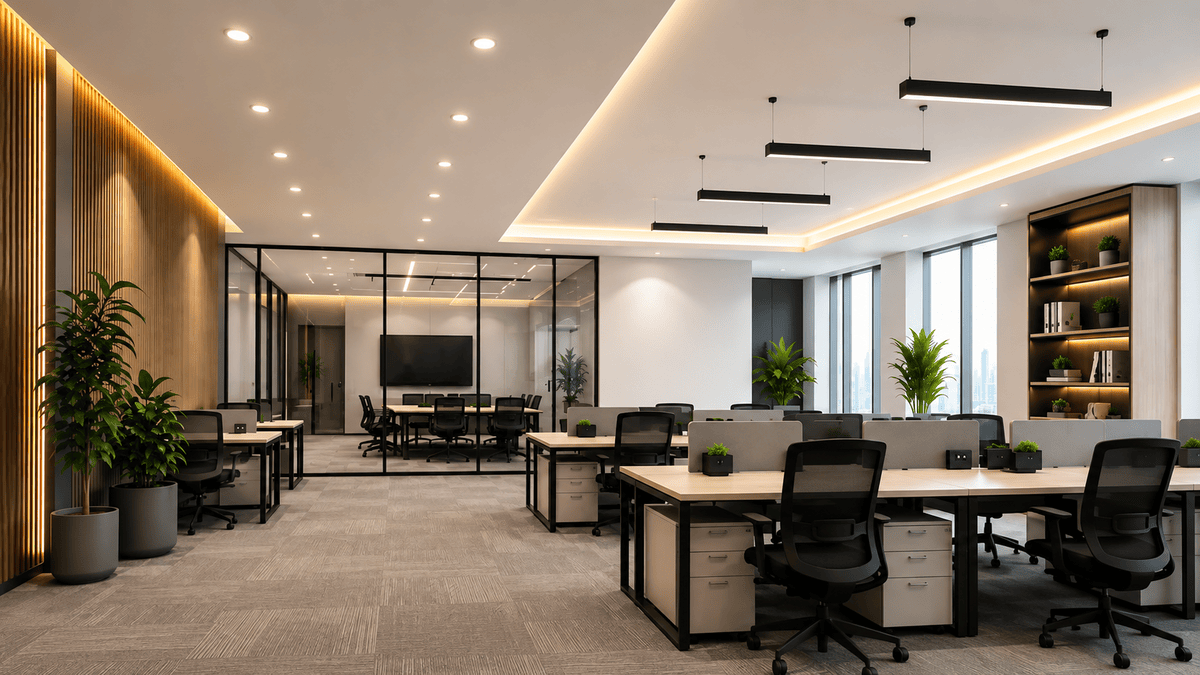
Walk into a well-lit business and you probably won’t stop to admire the lights. That’s the funny thing about good lighting—it tends to work quietly in the background. You notice the product, the desk, the person standing in front of you, or simply how comfortable the room feels. The lighting itself almost disappears.
Walk into a poorly lit space, though, and you notice it immediately. A gloomy reception area can feel unwelcoming. Harsh overhead lights can make a workplace tiring. Dark aisles in a shop can make customers uncomfortable. Lighting might not be the first thing a business owner thinks about, but it can have a surprisingly large effect on how people experience a property.
Lighting Is Part of the Customer Experience
For businesses that depend on physical locations, the environment matters. Customers make quick judgments, often without realising they’re doing it.
In retail spaces, lighting can influence how products look, how easy it is to navigate aisles, and even whether certain areas attract attention. A clothing store, for instance, needs lighting that represents colours accurately. A jewellery shop may use focused accent lights to bring out the details and sparkle of individual pieces.
Restaurants have different priorities. Warm, inviting lighting can create a relaxed atmosphere, while brighter illumination may be more appropriate for a fast-paced café or takeaway.
There isn’t one perfect lighting design for every commercial property. The purpose of the space should always come first.
Bright Doesn’t Automatically Mean Better
It’s easy to assume that more light equals better visibility. Not necessarily.
Extremely bright lighting can create glare, especially on computer screens, polished surfaces and glass. It can also make a room feel uncomfortable or sterile.
Good lighting is really about balance.
A commercial space may need a mixture of ambient, task and accent lighting. Ambient fixtures provide general illumination, task lights support specific activities, and accent lighting can highlight displays, artwork or architectural features.
Think of a hotel lobby. General lighting might make the entire area easy to navigate, while decorative fixtures create a sense of character around the reception desk. Both are doing different jobs, and that’s the point.
Offices Need More Thought Than Rows of Ceiling Lights
Office design has changed considerably. Many workplaces now include meeting rooms, collaborative areas, private spaces, breakout zones and flexible desks.
Each area has different lighting requirements.
Employees working at computers need comfortable, evenly distributed illumination that doesn’t produce distracting reflections. Meeting rooms may benefit from adjustable lighting, while breakout areas can use warmer fixtures to create a more relaxed feel.
For office buildings, lighting can also become part of the property’s overall energy strategy. Occupancy sensors, timers and smart controls can reduce the amount of time lights remain on in empty areas.
And here’s a simple detail that’s easy to overlook: people don’t all experience light in exactly the same way. Age, eyesight, screen use and personal preference can affect comfort. Giving occupants some control—through dimmers or local lighting, for example—can be surprisingly valuable.
Energy Efficiency Is Worth Considering
Commercial properties can have lights running for long hours, sometimes throughout the day and into the evening. That makes energy consumption an important consideration.
LED technology has become a popular choice because modern LED fixtures can deliver substantial illumination while generally consuming less electricity than older incandescent lighting.
But efficiency doesn’t come only from the bulb.
A well-designed system considers where light is needed and when it is needed. Motion sensors can switch lights on when someone enters a room. Daylight sensors can adjust artificial lighting when natural light is available. Scheduling systems can prevent lights from being left on overnight.
The goal isn’t to make a workplace dark. It’s to stop wasting electricity illuminating empty spaces.
Colour Temperature Changes the Atmosphere
Two rooms can have identical brightness levels but feel completely different because of colour temperature.
Warm light tends to feel cosy and welcoming, making it popular in hospitality and relaxation-focused areas. Cooler light can create a crisp, energetic appearance and may work well in offices, workshops and certain retail environments.
Choosing the right colour temperature isn’t simply a matter of taste. It should reflect what people are expected to do in the space.
A restaurant trying to create an intimate dinner atmosphere probably doesn’t want the same lighting as a warehouse where workers need clear visibility.
Small choices like this can make a space feel intentional rather than accidental.
Lighting Design Can Highlight What Matters
Good commercial lighting doesn’t just illuminate everything equally. It guides attention.
A retail display can be highlighted with accent lighting. Artwork in a hotel can become a visual focal point. A reception desk can be made more prominent through carefully positioned fixtures.
This is where expert lighting solutions can make a real difference. Instead of simply replacing old fittings one-for-one, a professional approach considers the property’s layout, ceiling height, natural daylight, customer movement and the activities taking place in each area.
Sometimes the answer isn’t more fixtures. It might be repositioning existing lights, changing beam angles or using controls more effectively.
Don’t Forget Exterior Lighting
A commercial property’s lighting strategy shouldn’t stop at the front door.
Outdoor lighting can improve visibility around entrances, parking areas, walkways and loading zones. It can also contribute to the appearance of a building after dark.
For businesses that operate in the evening, this becomes especially important. Customers need to find entrances easily, while employees may be moving between buildings or vehicles after sunset.
Motion-activated lights can be useful in less frequently occupied areas. Meanwhile, decorative exterior lighting can give hotels, restaurants and shops a distinctive appearance without requiring excessive brightness.
As always, glare should be considered. A badly positioned floodlight can be irritating to neighbouring properties and uncomfortable for people approaching the building.
Safety Has to Be Built Into the Plan
Commercial lighting isn’t purely decorative. It plays an important role in safety.
Staircases, corridors, entrances, car parks and work areas need suitable visibility. Emergency lighting is also essential in many commercial environments and should be installed, tested and maintained according to applicable requirements.
Electrical installations should be handled by appropriately qualified professionals. Flickering fixtures, damaged cables, buzzing sounds or unusual heat shouldn’t be ignored simply because the lights still work.
A lighting system may look simple from the outside, but there’s plenty happening behind the ceiling.
Maintenance Keeps Good Lighting Good
Even the best lighting design will deteriorate without maintenance.
Dust can affect fixtures. Lamps and components eventually fail. Controls may stop working correctly. Furniture or displays may move and create shadows that didn’t exist when the original design was installed.
Regular inspections can help businesses spot these issues before they become bigger problems.
It’s also worth reviewing the lighting whenever a commercial space is renovated. A new partition wall or redesigned showroom can completely change how light travels through the property.
Think About People, Not Just Fixtures
Perhaps the most useful way to approach commercial lighting is to stop thinking about fixtures for a moment.
Think about people instead.
Where do customers walk? Where do employees spend hours working? Which products deserve attention? Where are shadows causing problems? Which areas feel uncomfortable at certain times of day?
The answers to those questions should shape the lighting plan.
A good commercial environment isn’t created by installing the most expensive fixtures available. It’s created when light supports what people are actually doing.
And when it does that well, nobody has to think about it.
They simply walk in, see clearly, feel comfortable and get on with their day. That’s what good lighting is supposed to do.